Rice isn’t a side - it’s the base, the canvas, the stage. In so many Asian kitchens, the day begins with it and ends with it, a quiet constant that makes everything else make sense. You feel that truth the moment you sit down to a meal where rice is present in its proper role: not an accessory, not a polite scoop to fill space, but the warm centre that the whole table orbits.
Think of a bowl of fresh-steamed jasmine rice, the grains soft but distinct, breathing out that faintly sweet, grassy perfume. It arrives plain on purpose. Plain, so you can taste the curve of everything that will land on it. Plain, so your tongue has somewhere to rest between bright chillies and fermented funk, between smoky char and slippery braise. Rice is the hush between notes, the white space that turns a busy flavour sentence into something you can read.
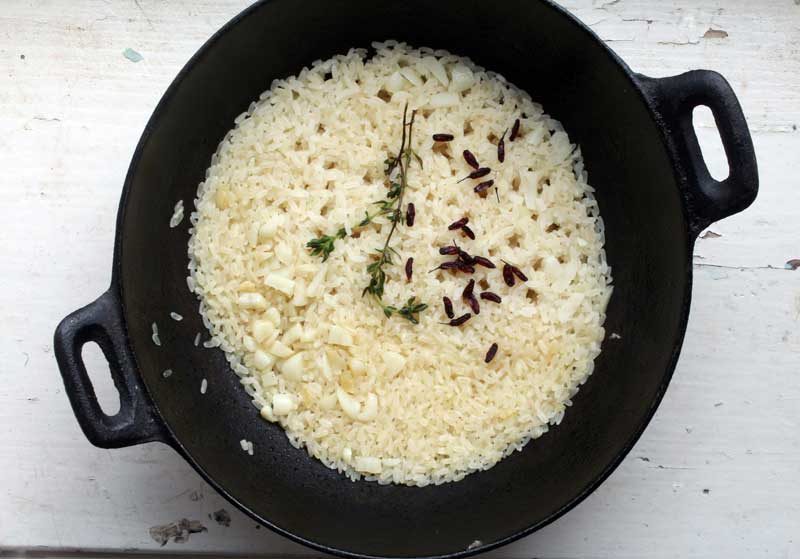
In Western settings, starch often competes with the main event - buttery potatoes, garlic bread, pasta glossy with sauce, all shouting to be noticed. Rice doesn’t shout. Rice listens. It structures the meal the way a good host structures a party: it gives everyone a place to stand.
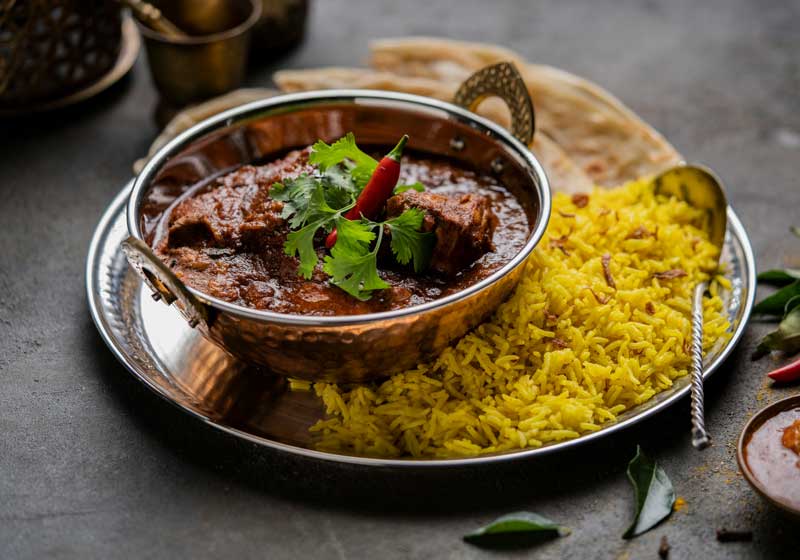
A bite of salty grilled fish is suddenly complete when it meets rice’s calm. A spoonful of rich curry doesn’t feel heavy because rice catches the fat, spreads it out, makes room for spice to sparkle instead of smother. Even the most intense dishes - the deep heat of a sambal, the anchovy punch of a thao stir-fry, the dark soy sweetness of a hong shao - are designed with rice in mind. Without it, they’re too loud. With it, they’re music.
Rice builds contrast the way a painter builds light. Each bite can be tuned. A little saucy pork and a lot of rice if you want comfort. More pickle, less rice if you want snap. A drizzle of broth to soften, a smear of chilli oil to wake things up. You’re not just eating a dish; you’re composing mouthfuls in real time, balancing salt against softness, acid against warmth, crunch against steam. Rice is the medium that lets you do that, the edible neutral that turns a spread of separate plates into one coherent meal.
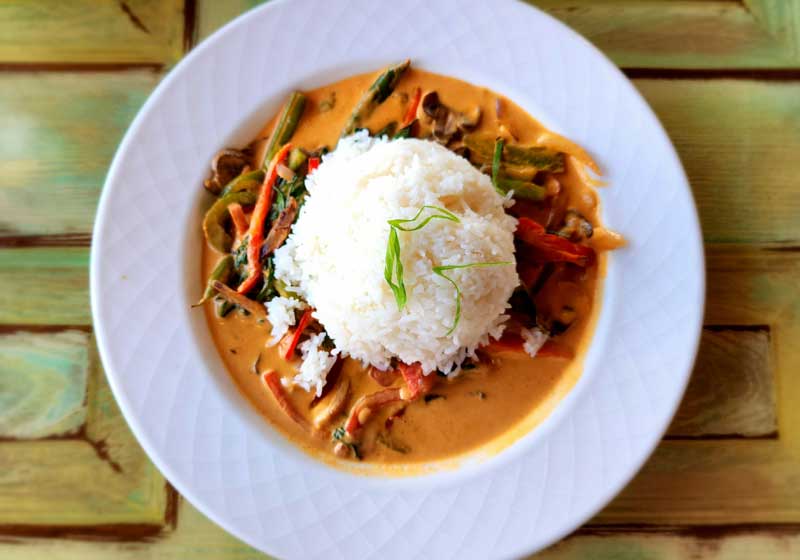
It carries flavour in a way that’s almost intimate. Watch how rice behaves: it absorbs, clings, cradles. It holds the sharpness of vinegar from a quick cucumber salad, the brine of kimchi, the citrus bite of nam prik and it turns those jolts into something longer, rounder, more lived-in.
It wears sauce like perfume. It catches stray bits - the crispy browned edges of a stir-fry, the last trail of dhal, the glossy remnants of mapo tofu - and makes sure none of that labour goes to waste. There is a thrift in rice, yes, but also tenderness: a belief that the best part of a meal is often what’s left behind.
Rice is memory food. It tastes like a home even when you’re far from it. The scrape of a rice paddle across a pot, the tiny sigh when the lid lifts, the way steam fogs your glasses - these are small rituals that carry whole lives.
A family might argue over who gets the scorched bottom, the nurungji, the tahdig, the crunchy prize at the end. Someone else folds cold rice into breakfast congee the next morning, coaxing comfort from yesterday’s grains. Rice doesn’t just sit on the plate; it stitches meals together across hours and generations.
When you eat rice as the plate, you start to understand the meal differently. Not as a star with supporting acts, but as a conversation with a centre. Rice teaches you to value pauses, to appreciate contrast, to welcome intensity without being overwhelmed by it.
It’s humble, but never incidental. It’s the stage where flavour performs - and the soft landing that makes you want an encore.