Image: HardtFilms
By Joseph Steele
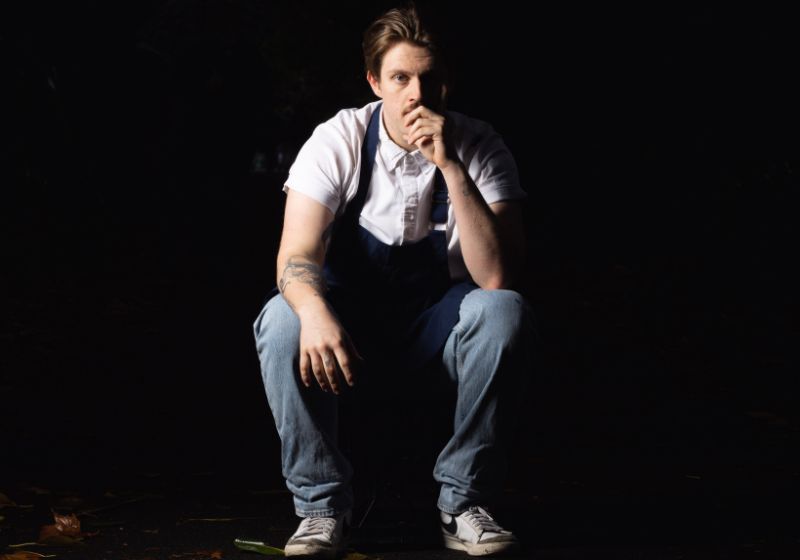
Australia has an ever-evolving dining culture, yet few young Chefs speak with the quiet clarity of Jack Huxtable. Having sharpened his craft at Restaurant Botanic and now refining it at Amaru, Chef Huxtable represents a new guard of kitchen leaders. Technically rigorous, ingredient-obsessed and deeply aware that culture matters as much as craft.
From fermenting native botanicals to dousing dry-aged duck in green ants, Chef Huxtable’s cooking sits squarely withing the Modern Australian conversation. But he’s quick to challenge the cliches. For him, Modern Australian cuisine isn’t a garnish of wattleseed or a scatter of finger lime pearls, but more a layered expression of global technique filtered through an unmistakably Australian lens.
As our concepts of fine-dining adapt to smaller teams and a more conscious generation of diners, Chef Huxtable is equally focussed on what happens beyond the pass. Mentorship, sustainability and kitchen culture aren’t just buzz words, for him, they’re the basis of an ethos. Shaping Australia’s food identity starts with how we lead.
You’ve worked in some of Australia’s most respected kitchens. What did each of them teach you that you’ve consciously kept — and what have you chosen to unlearn?
Having worked at Restaurant Botanic and currently at Amaru, I’ve learned that if you want to go far in this industry, you have to put yourself in those kinds of venues — places that demand more from you. Botanic is where I really learned how to cook properly: a lot of foraging, fermenting and understanding produce at a deeper level. Most importantly, it taught me about keeping standards — every day, no matter what. Amaru has given me the opportunity to refine that knowledge and pass it on. You take the discipline and the standards with you, but you also learn to let go of ego and the old-school mentality that doesn’t serve the next generation.
We talk a lot about "Modern Australian” cuisine. In 2026, what does that actually mean to you — and what does it get wrong?
I think modern Australian gets interpreted incorrectly. The best way to understand it is as techniques from all over the world, seasoned, touched or washed with native Australian ingredients. It’s still developing, still being shaped and it’s heavily influenced by global technique — as it should be. But Mod Oz is a lot deeper than just putting a few native ingredients on a plate. Native ingredients aren’t a trend; they’re a food style and a cuisine in their own right. When it’s done properly, it’s layered, thoughtful and grounded in respect.
What responsibility does the next generation of Chefs have in shaping Australia’s food identity?
There is no such thing as a bad student, a bad teacher. My generation has a responsibility not only to influence the cuisine of Australia, but to keep bringing new Chefs into the industry and actually nurture them. The industry is changing — culturally, financially, structurally — and we have to lead in an evolved way. That means mentoring properly, setting the tone and making kitchens places people want to stay in.
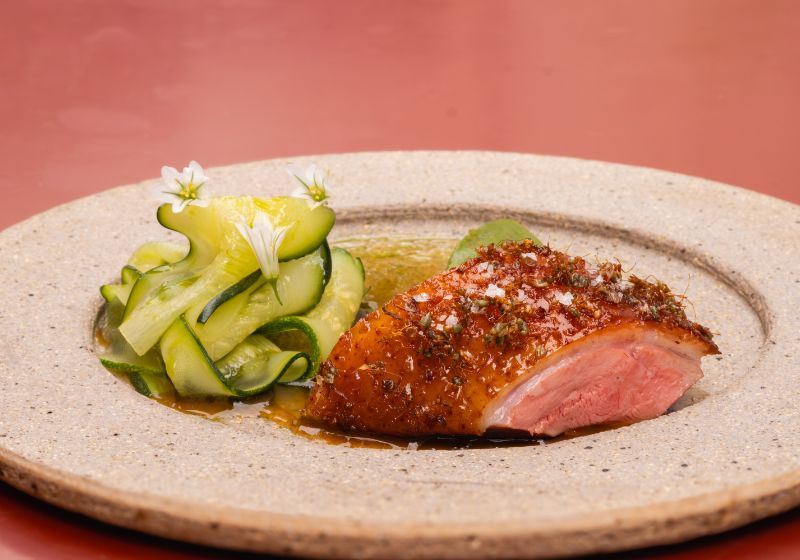
Image: Thomas Eames
What’s a dish you’ve cooked recently that genuinely surprised you — either in the process or the reaction?
I run a pop-up series called All Tuckered Out, and I’ve worked with some amazing Chefs on it. One of the main courses was a dry-aged duck, roasted in honey. While it’s still warm, it gets doused with green ants. You get this incredible hit of umami, sweetness and astringency all at once — it really wakes the palate up. Eucalyptus is another interesting ingredient. I’ve made an oil from it and incorporated it into a sea lettuce béarnaise. It’s familiar, but slightly disarming — that’s what makes it exciting.
The role of a Sous Chef today is as much about leadership as it is about cooking. What kind of kitchen culture are you trying to build?
I try to bring the energy. It all has its time and place — there’s a moment to be serious and a moment to lift the room. Junior Chefs learn by watching, so if Senior Chefs aren’t leading by example, that standard slips quickly. For me, the best kind of kitchen is high-octane, controlled chaos — intense, focused, but still supportive. It should feel alive.
Fine dining is evolving — smaller teams, tighter margins, more conscious diners. What skills will define successful chefs over the next decade?
The industry is changing and we have to evolve with it. A big part of that is teaching young Chefs properly and keeping them in the industry. There’s a balance between being firm and fair, and that balance is built through relationships within a team. From a food perspective, creativity has to extend to everything — right down to waste. Learning to ferment, to preserve, to utilise off-cuts in intelligent ways — that’s not just sustainability, it’s smart cooking. The Chefs who thrive will be the ones who can think holistically.
Are there Australian ingredients you think remain misunderstood or underutilised?
We’re still discovering new ingredients every day — but more than that, we’re still learning the techniques. It’s not just about the ingredient itself, it’s about how you handle it, how you extract flavour, how you balance it. That’s where I think we’re only scratching the surface.
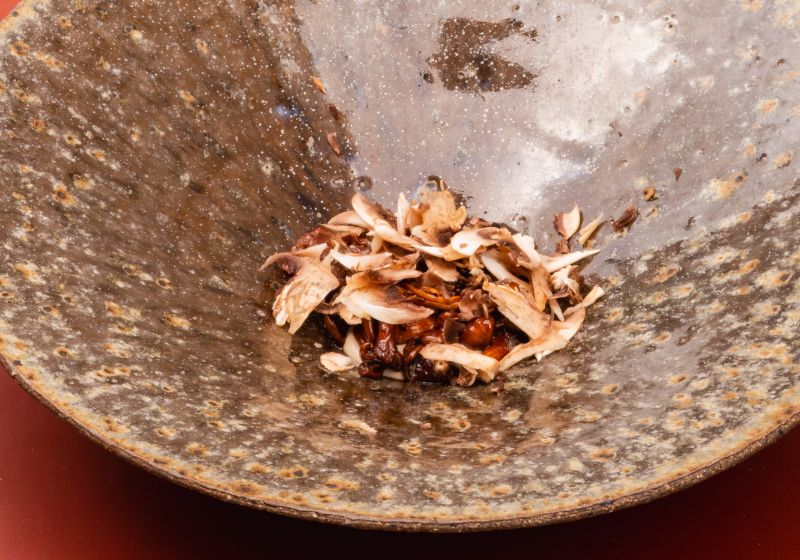
Image: Thomas Eames
Burnout is a real conversation in hospitality. How do you stay creatively sharp without losing yourself to the grind?
It’s important to look after your body, physically and mentally. If you’re not fuelled properly, you’re lacking stability and calmness — and that affects your creativity. Take the time to meal prep. Take the time to find something that helps you switch off and blow off steam. You can’t pour from an empty cup, especially in this industry.
If you were opening your own venue tomorrow, what wouldn’t you compromise on?
Flavour and standards. As an owner or Executive Chef, you have to be there to implement those standards — you can’t just set them and walk away. Being a business owner is busy work, but it’s important to stay hands-on. All the past and current Chefs I have worked with are really involved and hands on, which I have taken a lot from. I love cooking, so it’s about setting the standard, sticking to it and constantly working to elevate it. This also applies to the team culture you build and the experience you create for guests — from the first bite to the moment they walk out the door.