By Marie-Antoinette Issa
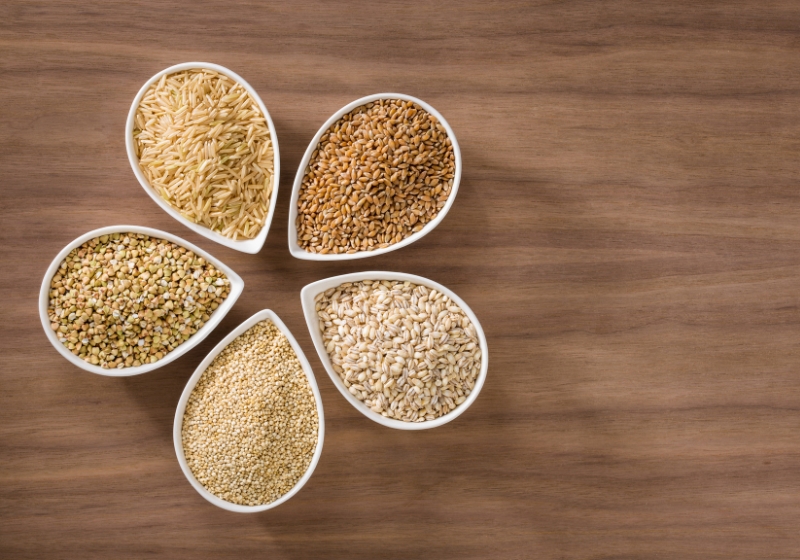
Long before quinoa became a pantry staple and sourdough starters had names, the Mediterranean was quietly building a grain repertoire rooted in survival, seasonality and restraint. Frekkeh, farro, burghul and cous cous were never trendy — they were practical, nourishing and endlessly adaptable. Today, as cooks look for depth over novelty, these ancient grains are resurfacing not as relics, but as quiet heroes of modern plates.
What makes Mediterranean grains feel so contemporary is their inherent versatility. Neutral enough to take on flavour, sturdy enough to hold texture, and comforting without being heavy, they align naturally with an era of lighter cooking and layered taste.
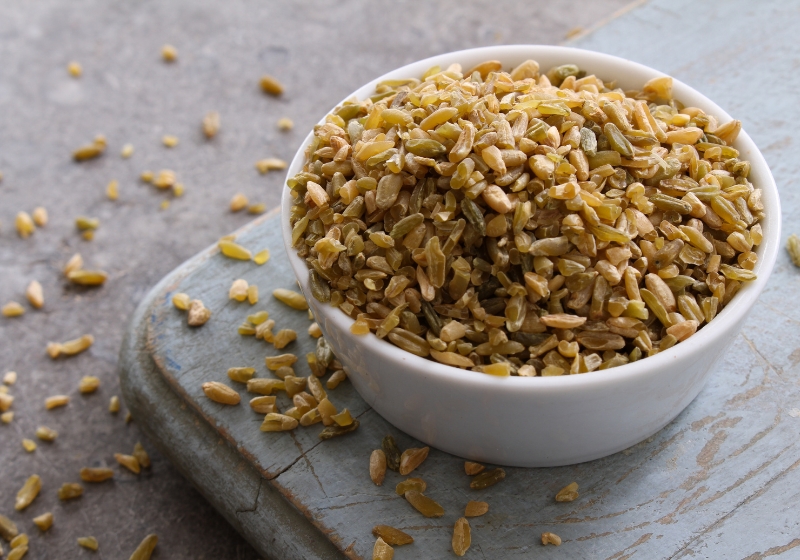
Frekkeh is perhaps the most intriguing of the group. Harvested while still young and roasted over open flames, this green wheat carries a smoky, almost grassy aroma that feels remarkably current. Traditionally used in Levantine soups and pilafs, frekkeh now turns up in grain bowls, risottos and salads. Cooked gently in stock and finished with olive oil and lemon, it delivers chew and savouriness without the creaminess of rice. Paired with roasted vegetables, yoghurt or charred meats, it feels both ancient and unmistakably modern.
Farro, by contrast, is all about substance. One of the oldest cultivated grains in the Mediterranean, it has a firm, pleasing chew and a deep, nutty flavour that holds its own against robust ingredients. In Italian cooking, farro has long been used in soups and salads, prized for its ability to absorb flavour without losing structure. That resilience is exactly what appeals to modern cooks. Tossed warm through roasted mushrooms and herbs, folded into salads with bitter greens and citrus, or cooked risotto-style for a heartier, grain-led dish, farro brings grounding to the plate. It’s comfort food with backbone — satisfying without indulgence.
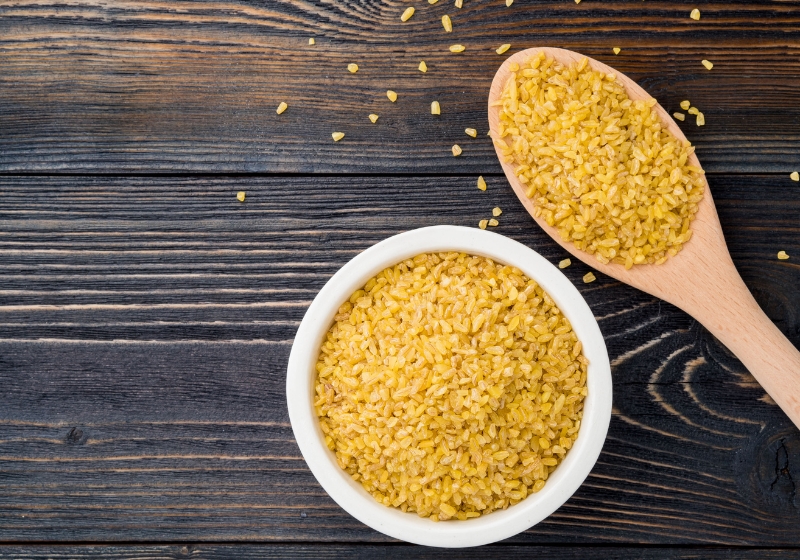
Burghul, often reduced in Western kitchens to tabbouleh duty, is far more expressive than it’s given credit for. Made from cracked parboiled wheat, it cooks quickly and absorbs flavour beautifully. Fine burghul can be soaked and folded into salads or dumplings, while coarser varieties lend body to stews and vegetable dishes. Contemporary cooks are treating it less like a side and more like a base — stirred through roasted pumpkin, topped with herbs and tahini, or served warm with olive oil and spiced nuts. Its nutty flavour and gentle bite make it an ideal canvas for vegetable-forward cooking.
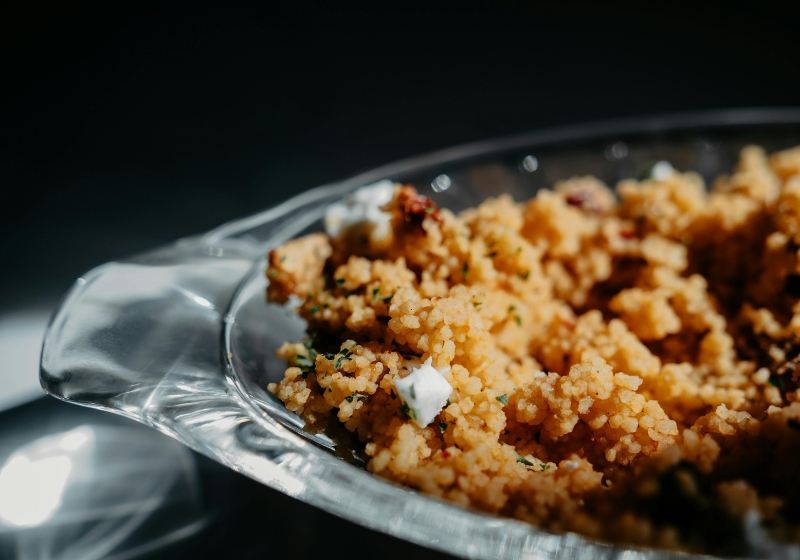
Cous cous, too, is enjoying a quiet reappraisal. Long misunderstood as a grain rather than a pasta, traditional hand-rolled cous cous is light, fluffy and designed to carry sauce. In North African cooking, it’s steamed multiple times, absorbing broth and fat along the way. Modern interpretations take a looser approach — cous cous tossed with browned butter and spices, served cold with herbs and citrus, or layered beneath slow-cooked vegetables. Less about strict tradition, more about texture and balance.
What unites these grains is how well they respond to contemporary techniques. They roast beautifully, crisp when pan-fried, and hold their structure in meal-prep-friendly dishes. Frekkeh can be cooked ahead and reheated without losing integrity. Burghul doesn’t turn gluey. Cous cous fluffs back to life with a splash of stock or olive oil. For cooks juggling flavour and function, that reliability matters.
There’s also a nutritional appeal that feels timely without being preachy. Naturally high in fibre and minimally processed, these grains offer sustenance without heaviness. But unlike many so-called "health” grains, they don’t need disguising. Their flavour is intrinsic; their texture, satisfying.
Perhaps most importantly, Mediterranean grains encourage a way of cooking that values restraint and layering over embellishment. A drizzle of good olive oil, a squeeze of lemon, a handful of herbs. These dishes don’t shout; they hum. They remind us that good food doesn’t need reinvention — just reconsideration.
As modern plates continue to shift towards balance rather than excess, frekkeh, farro, burghul and cous cous feel less like throwbacks and more like answers. In bringing these grains forward, today’s cooks aren’t chasing nostalgia. They’re recognising that some of the most relevant ideas in food have been here all along — quietly waiting for us to look back, so we can move forward.