By Marie-Antoinette Issa
Japanese cuisine is often praised for its precision and refinement, but its vegetable story is far wilder than it first appears. Beyond immaculate daikon rounds and perfectly trimmed scallions lies a deep-rooted tradition of foraging, seasonality and celebrating what grows untamed. Known collectively as sansai (mountain vegetables), alongside edible flowers and lesser-known greens, these ingredients reflect Japan’s reverence for nature in its rawest, most fleeting form. Bitter, grassy, fragrant and sometimes challenging, they bring contrast and character to a cuisine built on balance.Sansai (Mountain Vegetables)
Sansai are the edible shoots, leaves and stems that emerge in Japan’s mountains and forests each spring. Historically foraged by rural communities after long winters, they’re prized for their freshness and faint bitterness – a flavour profile associated with renewal. Varieties such as warabi (bracken fern), zenmai (royal fern) and kogomi (fiddlehead ferns) often appear lightly blanched, dressed with soy or sesame or tempura-fried to preserve their delicate flavour. Their appeal lies not in uniformity but in individuality; each carries the taste of the place it grew, making sansai as much about terrain as they are about tradition.
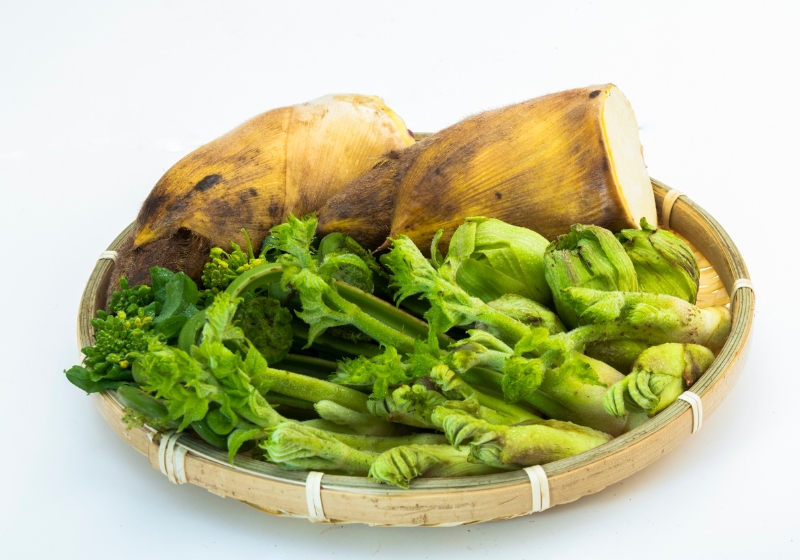
Butterbur is one of Japan’s most distinctive wild vegetables. Its tall stalks (fuki) are gently simmered or stir-fried, while the tightly coiled buds (fukinoto) are celebrated for their assertive bitterness. Often turned into fukinoto miso – a pungent, savoury paste – these buds signal the arrival of spring with unmistakable confidence. The flavour can be confronting at first, but it’s deeply loved for its cleansing quality, believed to awaken the palate after winter’s heavier foods.
Shiso (Perilla Leaf)
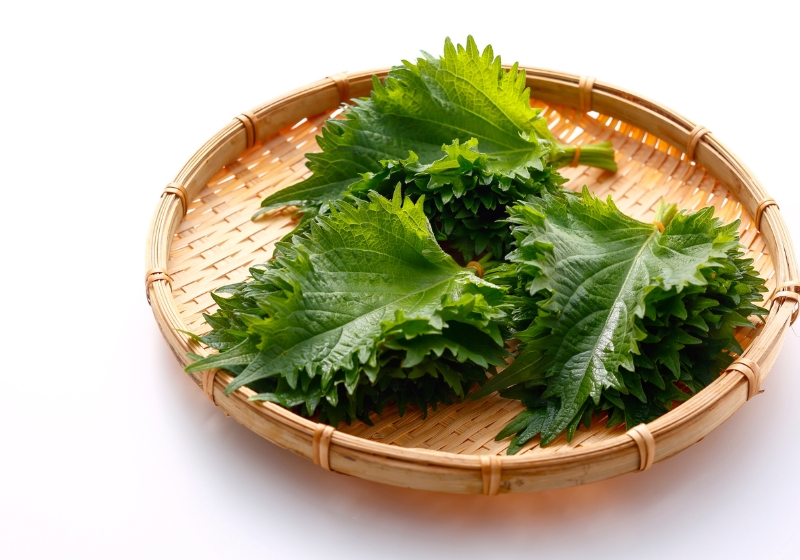
Shiso sits somewhere between herb and leafy green, with a flavour that hints at basil, mint and citrus all at once. Used fresh as a garnish, wrapped around sashimi or finely shredded into salads, it brings brightness and aroma rather than bulk. Green shiso is grassy and refreshing, while red shiso leans earthier and is often used to colour and flavour pickles like umeboshi. Its role is subtle but essential – a reminder that freshness can be as impactful as richness.
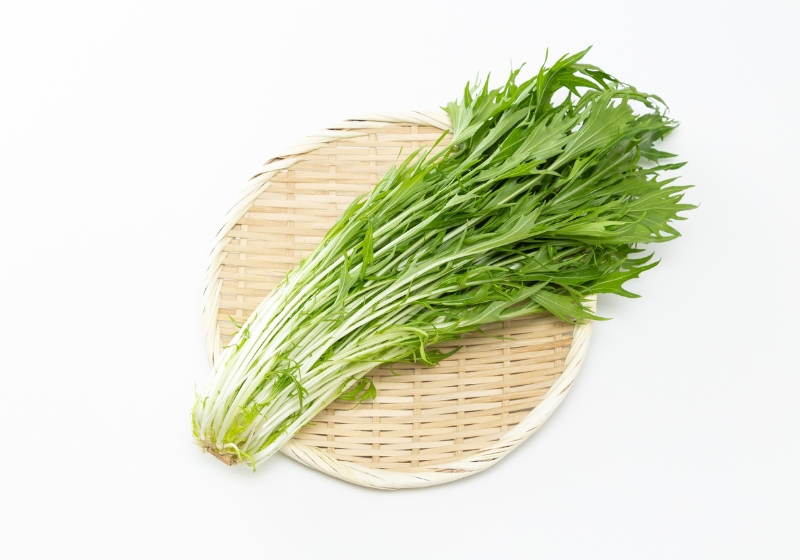
Mizuna, with its feathery leaves and mild peppery bite, is a staple in Japanese home cooking. Often used raw in salads or gently wilted in hot pots, it offers freshness without overwhelming other ingredients. Alongside mizuna are greens like komatsuna and shungiku (chrysanthemum leaves), each bringing their own personality. Shungiku, in particular, has a bold, herbal flavour that divides opinion, but adds complexity to soups and nabemono dishes. These greens aren’t meant to fade into the background – they’re there to add texture, bitterness and contrast.
Edible Flowers
In Japan, flowers aren’t just decorative; they’re part of the flavour landscape. Chrysanthemum petals are the most commonly eaten, lending a gentle bitterness and floral aroma to salads and hot pots. Cherry blossoms (sakura) are preserved in salt and used sparingly to scent sweets, rice and tea, their flavour subtle but evocative. Seasonal flowers reflect the Japanese appreciation of impermanence – they appear briefly, are used thoughtfully and then disappear until the next year.
Myoga
A member of the ginger family, myoga is grown for its aromatic flower buds rather than its root. Crisp and lightly spicy, with hints of ginger and citrus, it’s usually eaten raw, finely sliced and scattered over noodles, tofu or grilled fish. Myoga doesn’t dominate; instead, it refreshes, cutting through richness and adding a fleeting, almost cooling quality. It’s a perfect example of how Japanese cooking values nuance over intensity.
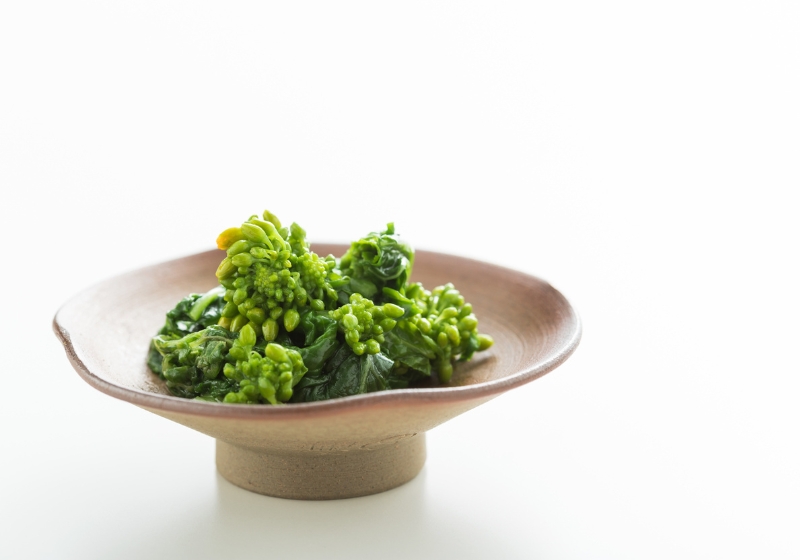
Nanohana
Often translated as rapeseed blossoms, nanohana combines tender stems, leaves and yellow buds with a pleasantly bitter edge. Lightly blanched and dressed with mustard or sesame, it’s a quintessential spring vegetable. The bitterness is intentional, balancing sweeter elements in a meal and reinforcing the idea that not all vegetables are meant to be mild or comforting.
The wild side of Japanese vegetables tells a story of seasonality, restraint and respect for nature’s rhythms. These ingredients aren’t polished or predictable – they’re fleeting, sometimes awkward, and deeply expressive of place and time. In embracing bitterness, fragrance and imperfection, Japanese cooking reminds us that vegetables don’t need to be tamed to be delicious. Sometimes, their wildness is the point.