The dining room used to be the destination. You arrived, were led, were placed. The theatre was out front: pressed linen, hushed voices, a polite distance between the table and the workings that fed it.
Somewhere along the way, the neighbourhood venue rewrote the script. The best seats aren’t tucked away behind a two-top anymore. They’re perched at the counter, elbow to elbow with strangers, close enough to feel the heat of the pass and hear the soft, constant choreography of service. It’s not a downgrade in comfort. It’s an upgrade in belonging.
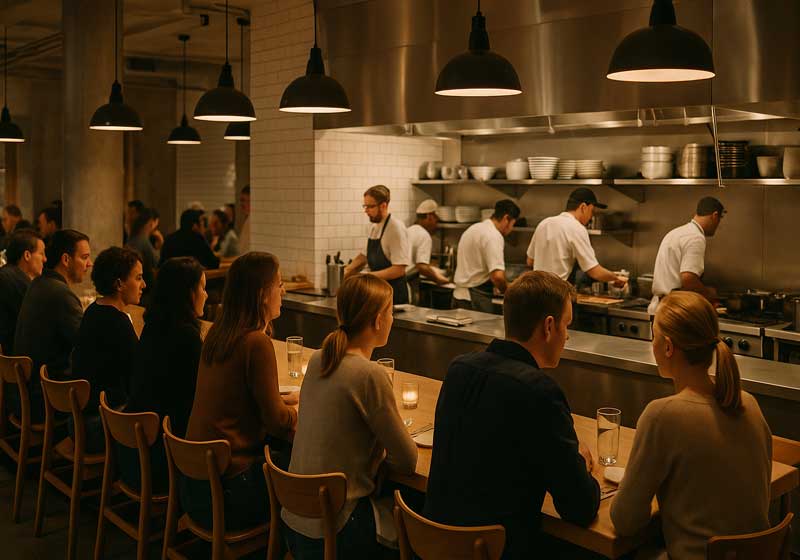
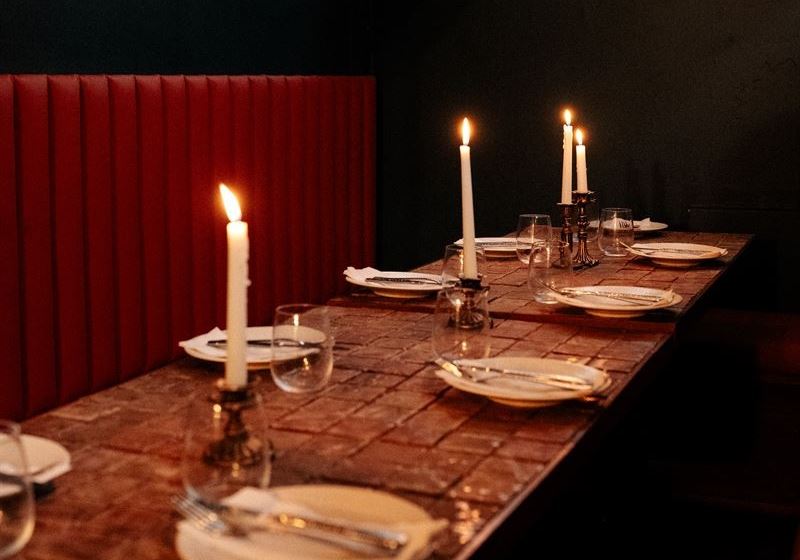
Kitchen counter culture is the new interior language of hospitality. Communal tables stretch like invitations rather than boundaries, encouraging the subtle, accidental conversations that make a room feel alive.
Counters facing the kitchen pull the back-of-house forward - not as spectacle, but as proof of care. Here, you don’t just eat a meal; you sense it arriving. You hear the knife work, the snap of flame, the hush before a plate is lifted. The kitchen is no longer a sealed engine room. It’s the heartbeat you’re allowed to sit beside.
What’s changed isn’t only where we sit, but how we’re hosted. The old model of hospitality leaned toward performance: a polished front stage, the staff as actors, the guest as audience. Counter seating flips that dynamic. Interaction becomes the point. You’re close enough for eye contact, close enough for a "how’s your night going?” to feel real rather than rehearsed. You might ask about the fish. You might watch a cook adjust something mid-service and feel the quiet pride beneath it. You become part of the room’s energy, not a consumer separated from it.
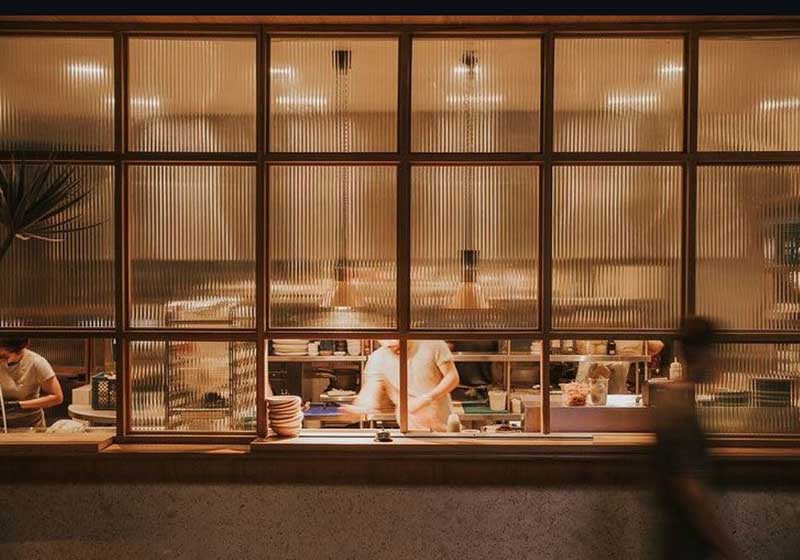
Design is doing more than rearranging furniture. It’s shaping how we taste and remember. When you sit facing the pass, you witness the final moments before food becomes your food. That proximity sharpens perception. You notice the gloss of a sauce because you saw it ladled. You pick up smokiness because you smelled it in the air a few seconds earlier.
Taste starts earlier than the first bite - it begins in sound, in scent, in the visual cues of craft. The architecture doesn’t just hold the experience; it seasons it.
There’s also a shift in the sense of place. Neighbourhood venues with open kitchens feel local in a way that velvet-curtained dining rooms often don’t. You hear staff calling out orders, hear laughter, hear the tiny mishaps and recoveries that make a service human. The room isn’t pretending to be timeless. It’s admitting it’s tonight. That immediacy makes the food feel rooted in its context - this street, this season, these people working in plain view to make it happen.
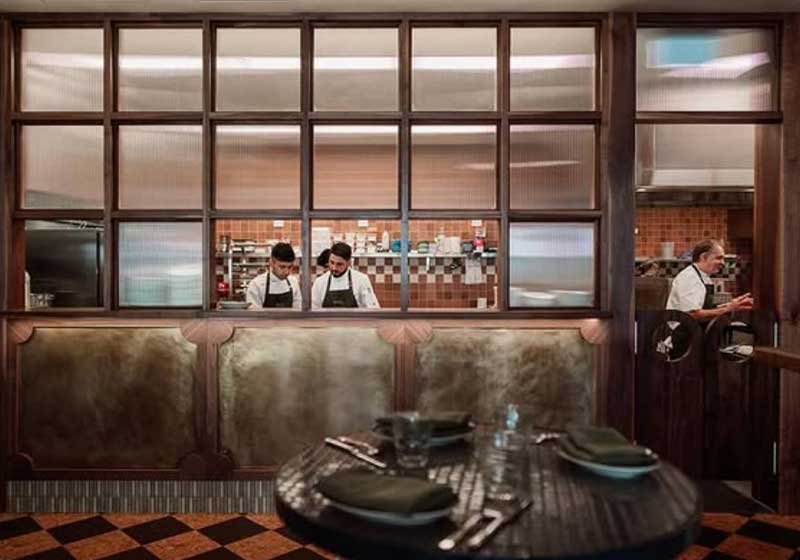
Communal seating adds another layer. Eating beside strangers softens the edges of city life. It creates a casual collective: everyone leaning in toward the same shared warmth, the same aromas, the same gratifying clatter of plates.
You borrow atmosphere from people you don’t know. Their delight becomes part of yours. It’s a subtle reminder that hospitality isn’t just a transaction between staff and guest; it’s the overall social fabric the room encourages.
None of this means the dining room is obsolete. It means it’s no longer the default throne. The counter seat is a small claim to intimacy, to involvement, to a kind of dining where the barrier between ‘us’ and ‘them’ melts away.
In these venues, hospitality isn’t a show put on for you. It’s a conversation you’re invited into. Sometimes, the closest seat to the kitchen is also the closest seat to the life of the place.