By Leigh O’Connor.
If you could step into a time machine and ask each decade what the future tasted like, you’d get a menu equal parts delightful, dystopian and downright hilarious. For generations, pop culture has fed us a buffet of bold predictions - some delicious, some dubious, all wonderfully imaginative.
Future Foods Through the Ages brings these visions to life through a beautifully illustrated timeline, showing how our ancestors believed we’d be dining in the world of tomorrow.
Our journey begins in the optimistic 1950s - a decade bubbling with scientific wonder and a firm belief that convenience was King. Food scientists and comic books alike promised ‘meal pills’ that would replace dinner altogether.
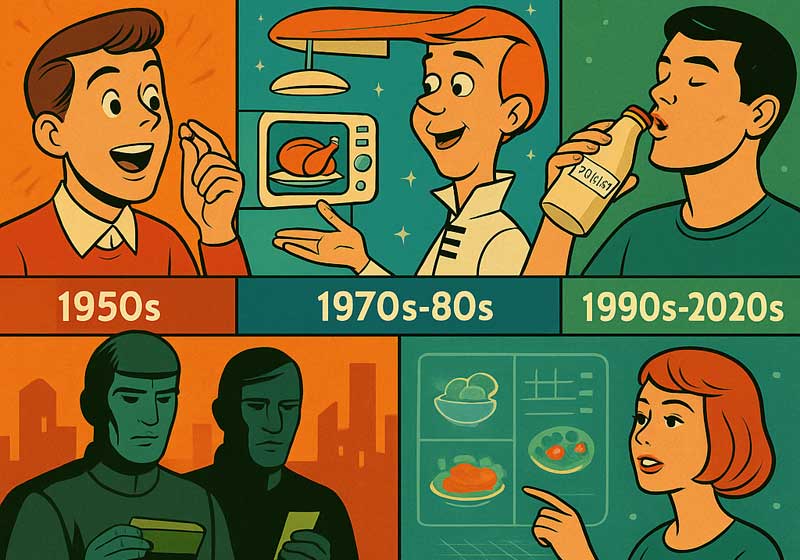
No pans, no dishes, no fuss - just swallow a tiny capsule and voilà! You’d somehow feel full, nourished and ready to jet off in your atomic-age sedan. It was tidy, efficient and utterly joyless. In the postwar glow, efficiency felt like magic. To the 1950s imagination, capsules were culinary nirvana.
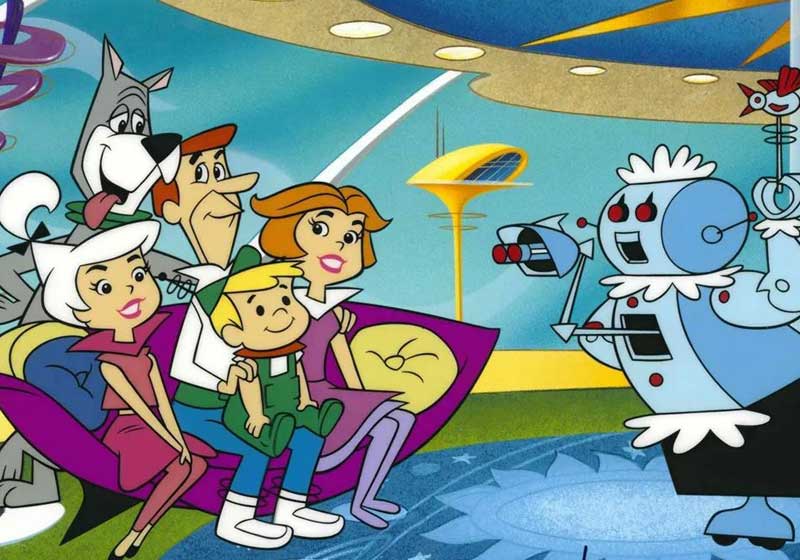
Fast forward to the 1960s and things get a little more animated - literally. Enter The Jetsons, zipping across TV screens with robot maids, conveyor-belt kitchens and push-button meals that materialised with a cheerful ding.
The future, according to this technicolour dream, tasted like instant gratification. If the 50s promised less cooking, the 60s promised no cooking at all. Their food fantasies hinted at a world where technology didn’t just make life easier - it made it effortless.
Then came the 1970s and 80s, decades that loved a good dose of dystopia with their dinner. Films imagined bleak, overpopulated futures where food was synthetic, rationed, or alarmingly mysterious. It was an era fascinated with survival - and sometimes squeamish about what survival might require. Suddenly, the meal pill didn’t seem quite so charming.
The 90s, ever cheeky and self-aware, turned the conversation playful again. Sci-fi blockbusters showed us airbrushed utopias full of holographic menus, personalised nutrition and mutant crops engineered to thrive on barren moons. In these visions, food wasn’t just futuristic - it was personalised, optimised, perfected. It felt like a promise and a warning all at once.
Then, somewhere between the rise of the smartphone and the fall of the DVD, real life began to catch up. Along came nutrient shakes, lab-grown meat, vertical farms, hydroponic super-greens and a renewed sense of curiosity about how we might feed billions without breaking the planet.
Soylent stormed onto the scene with minimalist swagger, answering the age-old question: "What if beige was a lifestyle?” Meanwhile, imaginative startups started turning mushrooms into leather, air into protein and nostalgia into marketing gold.
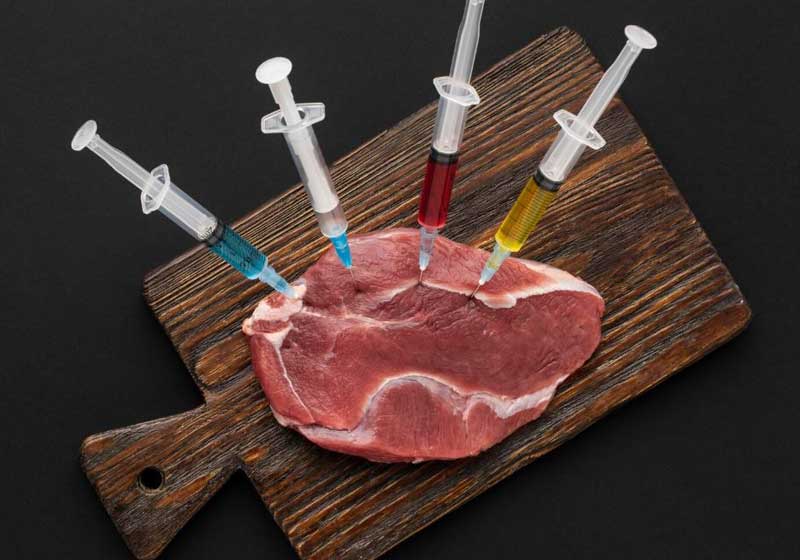
Today, standing at the edge of this wild timeline, the future of food feels less like a sci-fi prediction and more like a global conversation. We’re exploring insect protein with the same seriousness as space agriculture. We’re building plant-based meats that bleed convincingly.
We’re tinkering with AI-designed flavour pairings and climate-proof crops. Yet, despite all our innovation, something beautifully human persists: the desire for food that feeds not just the body, but the experience.
Looking back, every era’s vision of future food says less about what we’d eat and more about what we hoped - or feared - the world would become. That journey, illustrated across time, is the true feast. Bon appétit, tomorrow.